The Spinal Cord


[ click on the spinal cord sections for more details ]
[ by khilat qayyum ]
The Spinal Cord
cervical Region
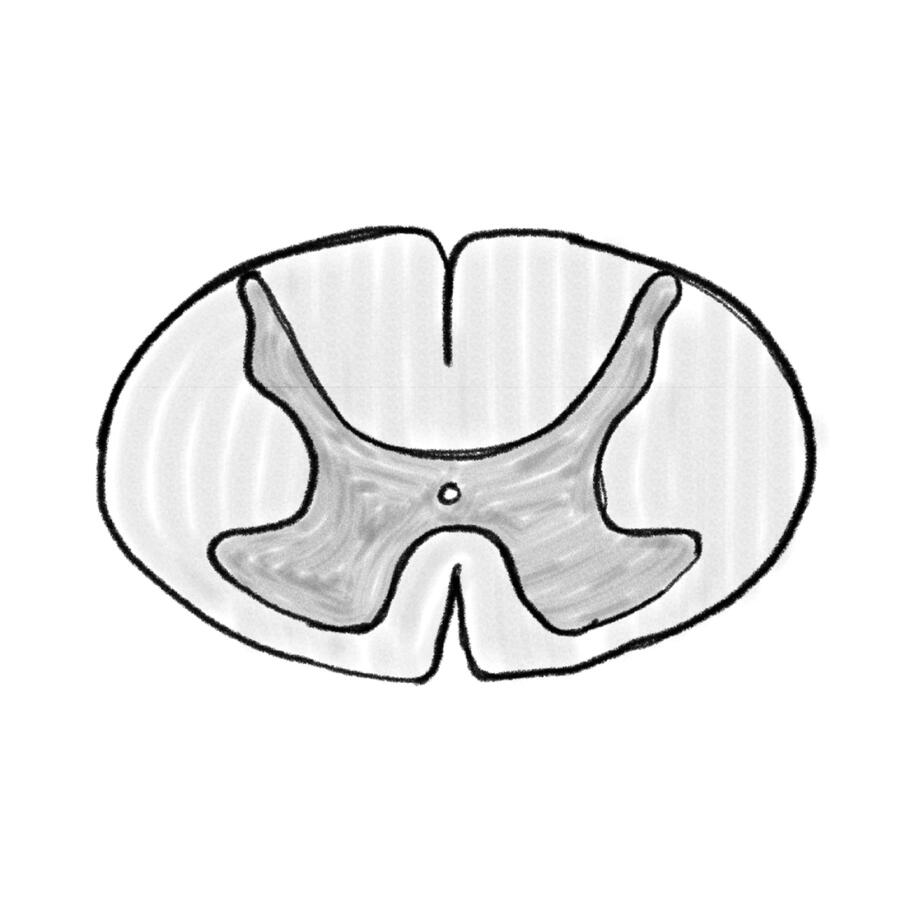
The cervical region is the most superior region of the spinal cord, made up of 7 vertebrae and 8 nerves.This region has the greatest amount of white matter present in a cross section, largely as a result of having to carry all the information needed by the rest of the spinal cord.The cervical region is also the site of the cervical enlargement, responsible for innervating the upper limbs.
The Spinal Cord
Thoracic Region
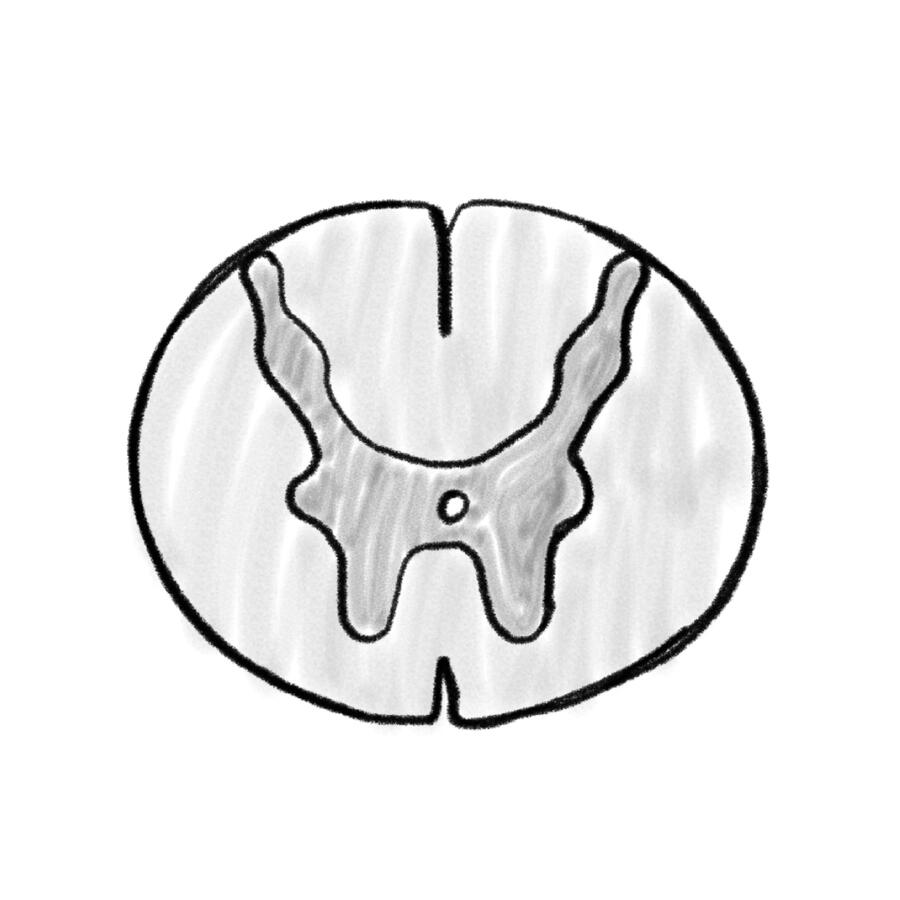
The thoracic region is located in the upper/middle back. This region is made up of 12 vertebrae and 12 nerves.This region consists of a small anterior horn as the thoracic nerves do not innervate large limbs.The thoracic region also has a lateral horn involved in the autonomous nervous system.
The Spinal Cord
Lumbar Region
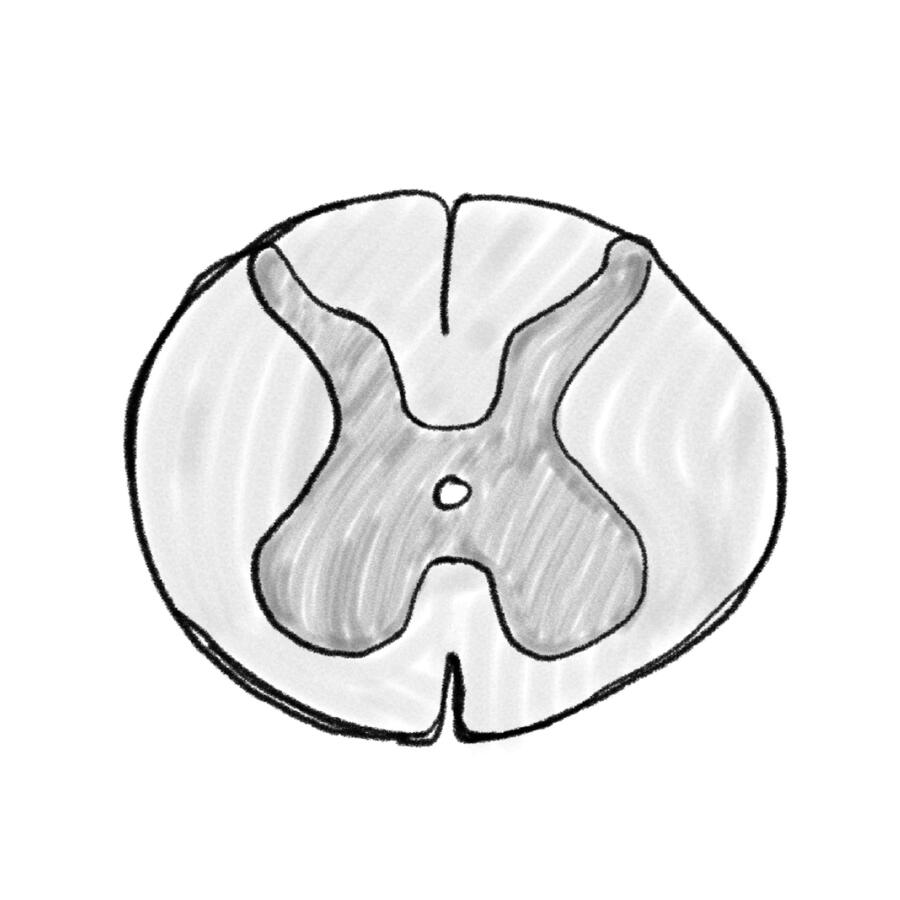
The lumbar region is located in the lower back, and consists of 5 vertebrae and 5 nerves.This region is home to the lumbosacral enlargement, responsible for innervating the lower limbs.L1/2 is also the location of spinal cord termination.
The Spinal Cord
Sacral + Coccygeal Region
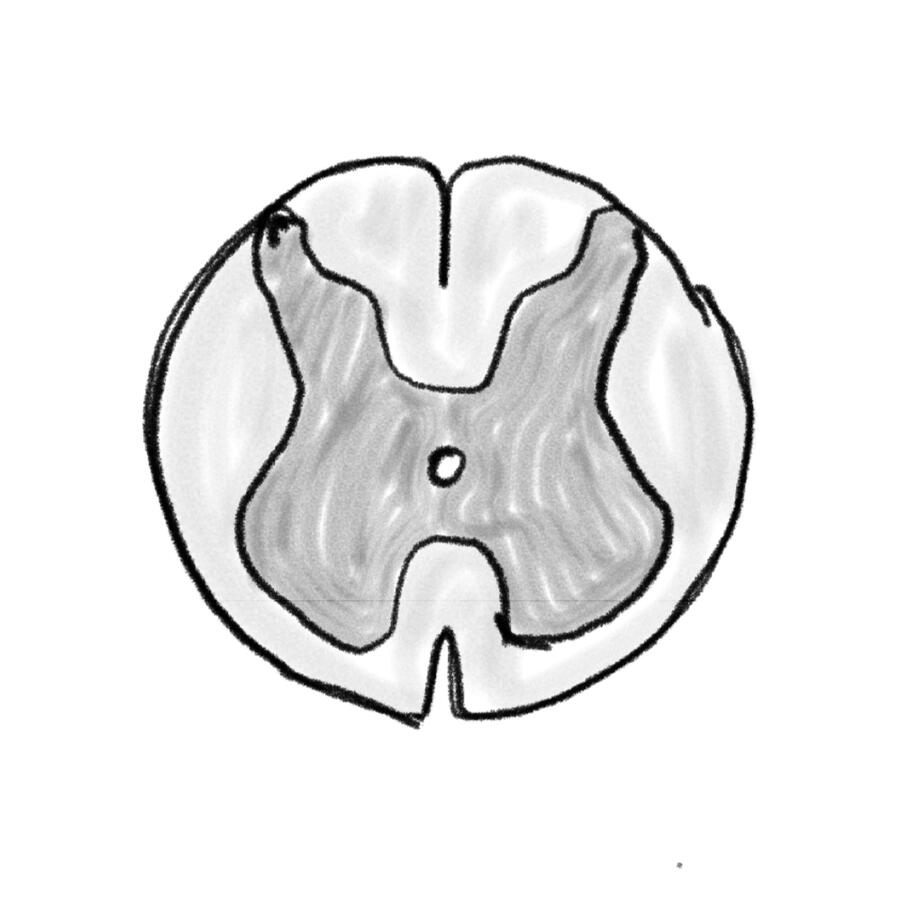
The sacral region, alongside the coccygeal region, is the most inferior part of the spinal cord. The sacral region is made up of 5 vertebrae that fuse into one "sacrum", and 5 nerves.The sacral region is filled with cerebrospinal fluid and the roots of many spinal nerves.The coccygeal region consists of 1+ vertebrae that fuses into one large bone called the "coccyx".
The Spinal Cord
White and Grey Matter
White Matter
Te
xt
Te
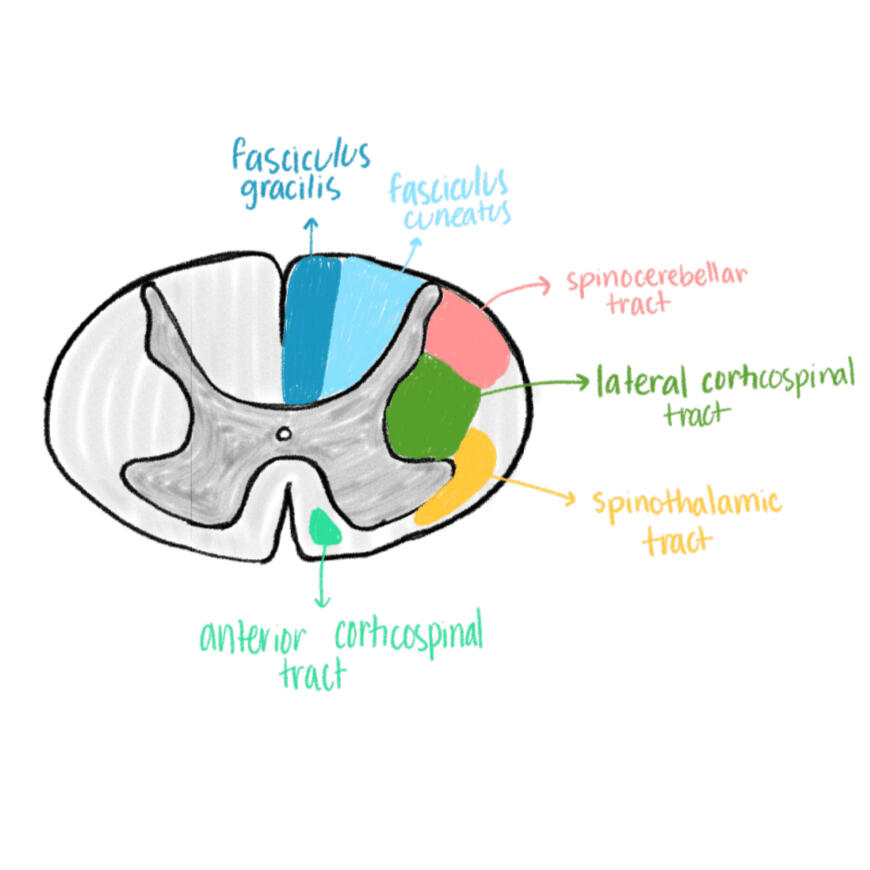
The white matter makes up all of the tracts that run through the spinal cord; both ascending and descending.Ascending tracts include both fasciculus, as well as spinothalamic and spinocerebellar tracts. They are sensory in nature.Descending tracts include both lateral and anterior corticospinal tracts, and are motor in nature.
Grey Matter
Te
xt
Te
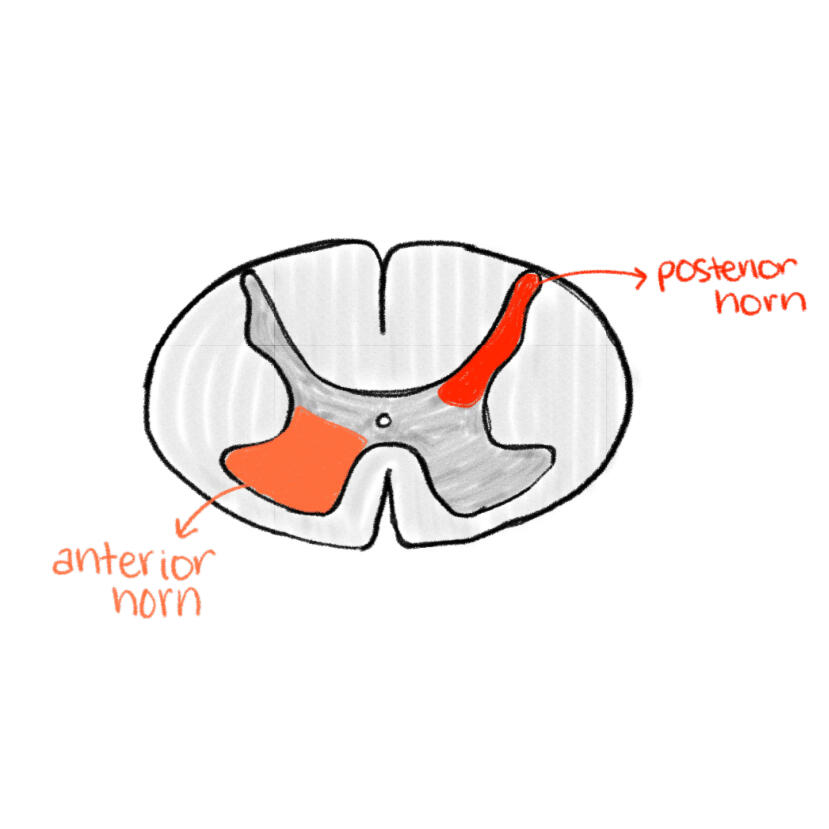
The grey matter of the spinal cord takes form of the anterior and posterior horns, as well as the lateral horn in the thoracic region.The anterior horns contain motor neurons, and are responsible for general organization of the core and limbs.The posterior horns contain sensory neurons, and are responsible for sending sensory information back to the CNS.
The Spinal Cord
Visceral and Somatic Systems
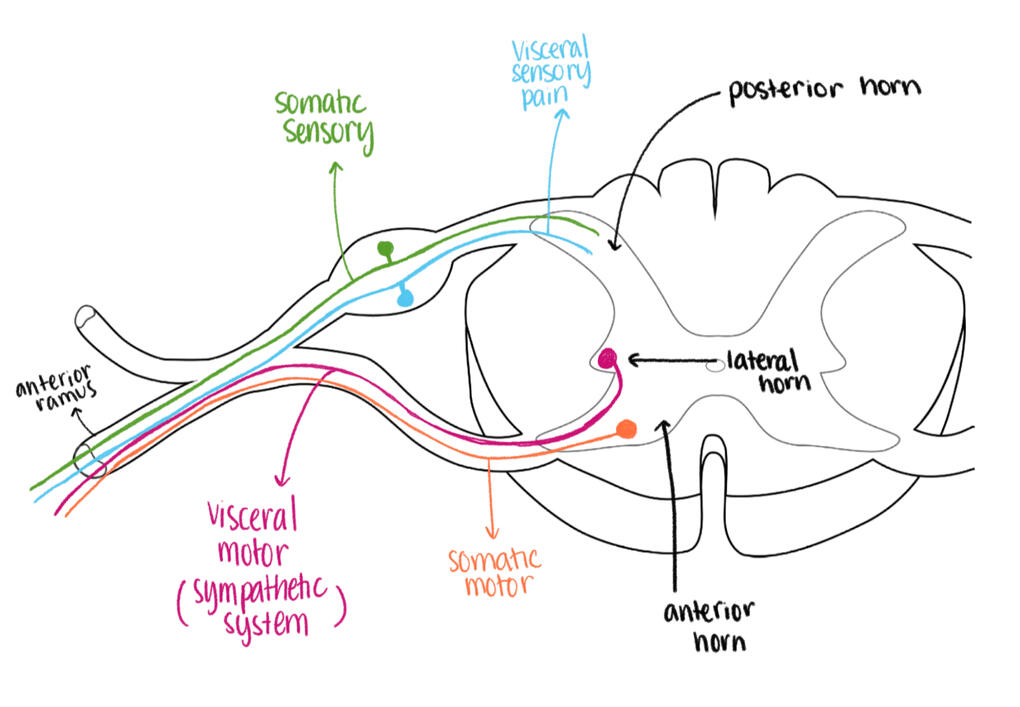
Visceral refers to the internal organs of the body and their functions.Somatic refers to the voluntary muscle movement and sensory perception.
The Spinal Cord
Spinal Tracts
Corticospinal Tract
Te
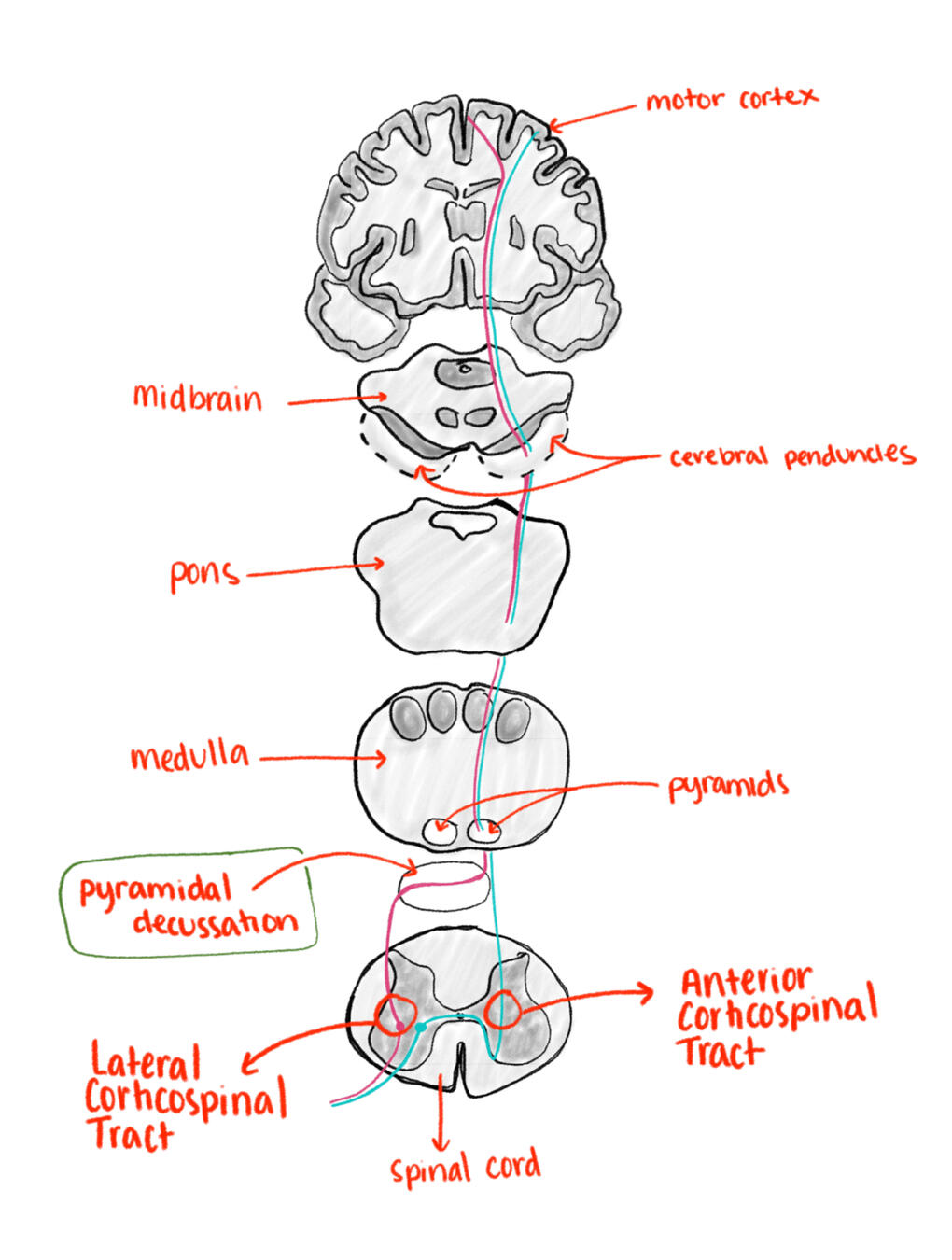
The corticospinal tract begins in the cortex and descends down to the spinal cord. The tract is motor in nature, carrying signals from the CNS to the peripheral parts of the body.The lateral corticospinal tract crosses the midline at the pyramidal decussations.
The Spinal Cord
fin.